A Practical Introduction for Chefs & Food Professionals
Duration: ~45 Minutes
Platform: Coursera / Eduniverse
Learning Environment: World Recipe ID Lab ,
Powered by: OXFORD INSTITUTE CULINARY Science & GASTRONOMY
🔹 OPENING
“Every recipe is more than a list of ingredients.
It is knowledge, experience, creativity — and intellectual work.”
Welcome to Intelligent Recipes Identity
In this short course, we will explore how modern chefs and food professionals can write better recipes, integrate basic nutrition information, and understand why recipe identity matters in today’s digital culinary world.
This is not a technical course.
This is a practical, future-oriented introduction designed to help you work smarter, not harder.
| Section | Key Message | Details / Activities |
|---|---|---|
| Opening | Every recipe is more than ingredients. It is knowledge, experience, creativity, and intellectual work. | – Welcome to Intelligent Recipes Identity – Purpose: Practical, future-oriented introduction.- Focus: Work smarter, not harder. |
| Section 1 – Why Recipe Writing is Changing | The role of a recipe has evolved. | Traditional recipes: personal notes, passed chef-to-chef, stored in notebooks.Modern recipes: shared globally, digital, used by restaurants/brands.Challenges:• Clarity (readable & consistent)• Standardization (reproducible)• Recognition (attribution to creator)AI & digital tools help solve these. |
| Section 2 – AI-Assisted Recipe Writing | AI enhances chefs’ expertise. | Recipe Structure: title, yield, ingredients, method, optional notes.How AI Helps: clarity, standardization, tone adjustment, translation/localization.Live Example: Handwritten recipe → AI formats, clarifies, scales, adapts.Key Quote: “Creativity is yours. AI organizes & refines.” |
| Section 3 – Nutrition Facts in Modern Recipes | Nutrition is no longer optional. | Expectations: calorie awareness, macronutrient balance, allergen transparency.Basics: calories, protein/fats/carbs, sugar/fiber, common allergens.AI Support: estimate nutrition, create summaries, standardize labels.Note: Indicative data only; transparency over precision. |
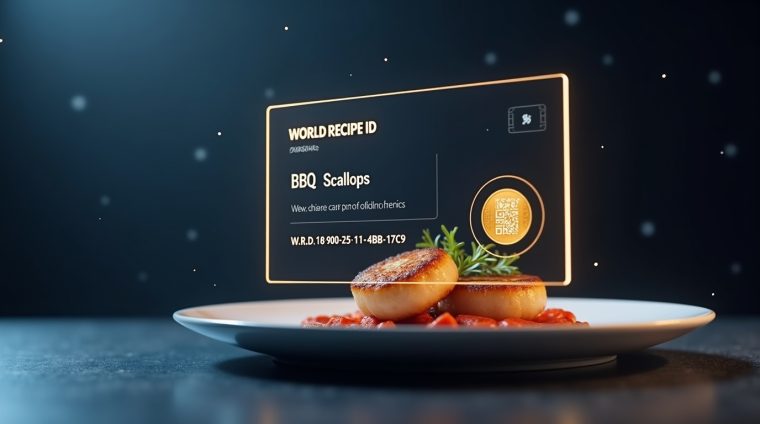
| Section 4 – What is Recipe Identity? | A recipe without identity is invisible. | Problem: millions of recipes copied or un-attributed.Recipe Identity: unique digital ID, registered creator, timestamp, traceable reference.World Recipe ID Lab: structured recipes, unique code, searchable & verifiable.Benefits: trust, credibility, long-term value.Quote: “When a recipe has identity, it becomes part of the culinary record.” |
| Section 5 – From Recipe to Culinary Asset | Recipes have value when structured and recognized. | Combination: AI-assisted writing + nutrition awareness + digital identity.Transforms a recipe into: professional document, creative asset, future-ready culinary record.Final Thought: Introduction to a smarter workflow.Call to Action: Explore World Recipe ID Lab, experiment, create your digital culinary identity.Quote: “Create. Structure. Identify.” |
🔸 Final Thought
This course is an introduction.
A first step into a smarter culinary workflow.
You are invited to explore the World Recipe ID Lab,
experiment with your own recipes,
and experience what it means to give your culinary work a digital identity.
Create. Structure. Identify.
Thank you for being part of the future of recipe writing.
Certificate & Recognition:
This course is jointly certified by Oxford Institute of Culinary Science & Gastronomy and the World Recipe ID Lab.
Participants will receive an official certificate recognizing their skills in AI-assisted recipe writing, basic nutrition awareness, and digital recipe identity — a future-ready credential for modern chefs and food professionals.
🔹 SECTION 1 – WHY RECIPE WRITING IS CHANGING
🎯 Key Message:
The role of a recipe has evolved.
Traditionally, recipes were:
-
Personal notes
-
Passed from chef to chef
-
Stored in notebooks or memory
Today, recipes are:
-
Shared globally
-
Published digitally
-
Used by restaurants, brands, startups, and institutions
This change creates three new challenges:
-
Clarity – Recipes must be readable and consistent
-
Standardization – Recipes must be reproducible
-
Recognition – Recipes must be attributable to their creator
This is where AI tools, nutrition awareness, and recipe identity become essential.
🔹 SECTION 2 – AI-ASSISTED RECIPE WRITING
🎯 Key Message:
AI does not replace chefs — it enhances their expertise.
Let’s start with the foundation: recipe structure.
A professional recipe usually includes:
-
Recipe title
-
Yield or portions
-
Ingredients (clear and measurable)
-
Method or procedure
-
Optional notes or variations
🔸 How AI Helps
AI tools can assist chefs by:
-
Improving clarity of instructions
-
Standardizing language
-
Adjusting tone (professional, educational, commercial)
-
Translating or localizing recipes
🔸 Live Example (Narrative)
Imagine you have a simple handwritten recipe.
Instead of rewriting it manually, you can ask AI to:
-
Reformat the recipe professionally
-
Clarify ambiguous steps
-
Adjust it for different portion sizes
-
Adapt it for menu, book, or digital publication
AI becomes a smart assistant, not a decision-maker.
The creativity is yours.
The experience is yours.
AI simply organizes and refines it.
🔹 SECTION 3 – NUTRITION FACTS IN MODERN RECIPES
🎯 Key Message:
Nutrition is no longer optional.
Modern consumers, institutions, and platforms increasingly expect:
-
Calorie awareness
-
Macronutrient balance
-
Allergen transparency
This does not mean every chef must become a nutritionist.
🔸 Practical Nutrition Basics
At a basic level, nutrition information may include:
-
Energy (Calories)
-
Protein, fats, carbohydrates
-
Sugar and fiber (optional)
-
Common allergens
AI tools can:
-
Estimate nutrition values
-
Convert ingredient lists into nutrition summaries
-
Help standardize nutrition labels for recipes
🔸 Important Note
Nutrition data should be understood as:
-
Indicative, not medical
-
Supportive, not prescriptive
The goal is transparency, not clinical precision.
🔹 SECTION 4 – WHAT IS RECIPE IDENTITY?
🎯 Key Message:
A recipe without identity is invisible.
Think about this:
-
Millions of recipes are published every year
-
Most are copied, modified, or reposted
-
Very few are properly attributed
Recipe Identity solves this problem.
🔸 Recipe Identity Means:
-
A unique digital identifier
-
A registered creator or owner
-
A timestamp and origin
-
A traceable reference
This does not mean ownership in a legal sense.
It means recognition, attribution, and structure.
🔸 World Recipe ID Lab
Inside the World Recipe ID Lab:
-
Recipes are structured professionally
-
Each recipe receives a unique identity code
-
Recipes become searchable, verifiable, and traceable
This creates:
-
Trust
-
Professional credibility
-
Long-term value for chefs and creators
When a recipe has identity,
it becomes part of the culinary record.
🔹 SECTION 5 – FROM RECIPE TO CULINARY ASSET
🎯 Key Message:
Your recipe has value — when it is structured and recognized.
By combining:
-
AI-assisted writing
-
Basic nutrition awareness
-
Digital recipe identity
You transform a recipe into:
-
A professional document
-
A creative asset
-
A future-ready culinary record
🔸 Final Thought
This course is an introduction.
A first step into a smarter culinary workflow.
You are invited to explore the World Recipe ID Lab,
experiment with your own recipes,
and experience what it means to give your culinary work a digital identity.
Create. Structure. Identify.
Thank you for being part of the future of recipe writing.
- 7 Sections
- 6 Lessons
- 45 Minutes
- OpeningEvery recipe is more than ingredients. It is knowledge, experience, creativity, and intellectual work.1
- Section 1 – Why Recipe Writing is ChangingTraditional recipes: personal notes, passed chef-to-chef, stored in notebooks.Modern recipes: shared globally, digital, used by restaurants/brands.Challenges:• Clarity (readable & consistent)• Standardization (reproducible)• Recognition (attribution to creator)AI & digital tools help solve these.1
- Section 2 – AI-Assisted Recipe WritingRecipe Structure: title, yield, ingredients, method, optional notes.How AI Helps: clarity, standardization, tone adjustment, translation/localization.Live Example: Handwritten recipe → AI formats, clarifies, scales, adapts.Key Quote: “Creativity is yours. AI organizes & refines.”1
- Section 3 – Nutrition Facts in Modern RecipesExpectations: calorie awareness, macronutrient balance, allergen transparency.Basics: calories, protein/fats/carbs, sugar/fiber, common allergens.AI Support: estimate nutrition, create summaries, standardize labels.Note: Indicative data only; transparency over precision.1
- Section 4 – What is Recipe Identity?Problem: millions of recipes copied or un-attributed.Recipe Identity: unique digital ID, registered creator, timestamp, traceable reference.World Recipe ID Lab: structured recipes, unique code, searchable & verifiable.Benefits: trust, credibility, long-term value.Quote: “When a recipe has identity, it becomes part of the culinary record.”1
- Section 5 – From Recipe to Culinary AssetCombination: AI-assisted writing + nutrition awareness + digital identity.Transforms a recipe into: professional document, creative asset, future-ready culinary record.Final Thought: Introduction to a smarter workflow.Call to Action: Explore World Recipe ID Lab, experiment, create your digital culinary identity.Quote: “Create. Structure. Identify.”1
- Quiz: Intelligent Recipes Identity1